Coca Cola continues to spread happiness through everything they do. We still see many ‘Buy 1 Get 1 Free’ offers as we scan a supermarket aisle. They are mostly faceless promotions purely driven to push product down our throat (or wherever else) with no brand building or engagement at heart. And here we have Coca Cola creating a spin on the same old same old.
Cocal Cola uses a bit of creativity to turn a Buy 1 Get 1 free promotion into a branded experience using a simple vending machine. The idea was to create a taller than usual vending machine that can be used normally but with the help of a friend can get you two cans for the price of one. What do friends need to do? They need to help each other reach the top of the machine where they can click the button which dispenses two cans. Alone this button would simply not be reachable.
The idea is wonderful at many levels. Besides the immediate impact on sales Coca Cola has created another on-ground experience which leads to genuine ”happiness”, this time between two friends. By capturing those moments on a video the same can and is being amplified in a big way online. This has turned a small scale brand activation into social content which is likely to go viral and further contribute to building the brand. Check the video below. The results are spectacular!
Pepsi takes the lead with a cutting-edge innovation using IntoNow. What is IntoNow? It is an iOS app that does to TV what Shazam did to music. It can listen to a clip of any TV show live as it happens and tell you the name of the show and the specific episode. Plus it can do that for any show for the last five years. Amazing in it’s own right!
Now Pepsi has managed to pull off a breakthrough using this technology. Users who tag a Pepsi MAX commercial as it airs get a digital coupon redeemable for a free Pepsi MAX. A brilliant idea that has some profound implications. For the first time ever technology has enabled linking a TV commercial message with a real world action. This idea opens up a world of opportunities. The dynamic can be applied to develop many ideas that combine live TV content with real world action – from a promotional offer, to an experience that continues in the real world to something that unlocks exclusive access to a desired product or service. The possibilities are indeed many.
Another aspect of this idea is it’s ability to bring the analytics of digital to TV viewing. It is now possible to determine exactly what was the profile of the people who tagged the TV commercial. Of course, this could bring about privacy issues and I am not sure if such data was shared by IntoNow but even if broad demographic data is shared it is of great value to a marketer.
I think this is part of a larger theme of real time marketing enabled by mobile technology connected to the digital world. We have seen KLM deliver surprises in real time using location based applications. Here Pepsi is offering free product based on an event based application. This merging of the real world with the digital world is something of a trend that is expected to become more common in the days to come. A proof of it’s potential is the fact that Yahoo! bought IntoNow for a reported $20-$30 million dollars according to estimates by TechCrunch. Not bad for a service that has been running for only about 12 weeks. And this was announced days after the Pepsi MAX execution. It seems this was the final clinch to the deal. Watch this space! More real time marketing to come…
Coca Cola, the iconic brand that sits at the top of the 100 most valuable brands list according to Interbrand, is making a big push into the musical array in 2011. For a sugary drink that is not really good for anyone holding the top spot really goes to show the power and position of the brand in the minds of the consumer. If you come to think about it all the strategic moves by Coca Cola are aimed at creating a blue ocean of uncontested market space. Of course not everything they have done has been successful – case in point, Coca Cola Blak – the coffee flavored cola beverage. But by and large Coke was a beverage like no other at the time of it’s creation. In fact it was the only beverage in the world which had about 60mg of cocaine in every serving up until 1903. Rumor or True? No one knows. But time and time again they have done some wonderful things, like sponsoring one of the world’s most iconic TV shows – American Idol, thereby further entrenching their equity and association with music. Even the decision to work with Weiden + Kennedy was a great strategic move. To go for the hottest and not just the biggest. They have done some great brand building work for Coca Cola. Owning something broad and general like happiness was never going to be easy for anyone, but Coke certainly comes out on top in this space. From Happiness Factory to Open Happiness, W+K and Coke have produced some great creative across media.
And here we are in 2011 with another hot new initiative by Coca Cola – branded music. It seems that this is part of a larger strategic push that should unfold through the year. For now they have created a song supported by TV spots which is ruling the radio waves and conventional TV all the same. It evokes that moment when one gets carried away enjoying their music, singing along and feeling like a star. But first check out the video to “Can you feel it tonight” by One Night Only. Then see the TV spot adaptation below. Good stuff!
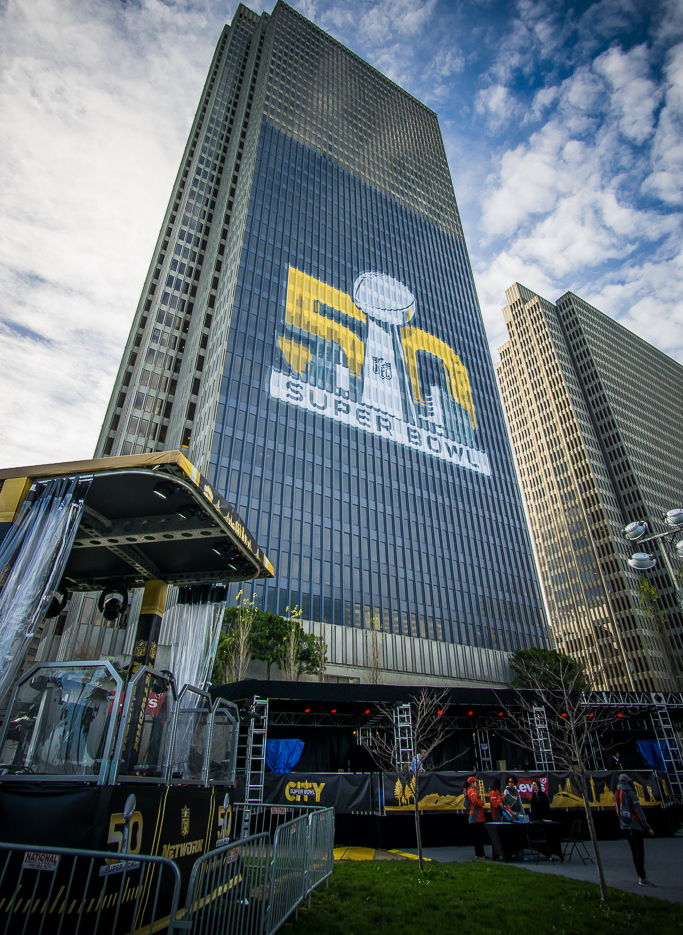
UPDATE: 3D Projection Mapping is exploding! Samsung has done it again. First it was in the Netherlands for the 3D TV launch (read below) and now it’s with Vodafone for the launch of the Samsung Galaxy Tablet in Spain. Great stuff!
Avatar took the world of Hollywood by storm when James Cameron introduced the world to 3D! Not that 3D was entirely a new thing up to that point but as Malcolm Gladwell put it – it has reached a Tipping Point. Since then we have seen Samsung and the likes bring 3D to our homes, Micromax is attempting to do so on our mobiles, NVIDIA is bringing 3D to the world of gaming and some fellows from the world of advertising are doing the same with marketing communications.
What am I talking about? 3D Projection Mapping. It’s not exactly the kind of 3D you see in movies but it certainly is eye-popping stuff and it’s getting big…fast! A quick search for 3D Projection Mapping examples revealed innumerable videos. Like all new marketing innovations many applications seem to have used the technology for the sake of it. Some however have combined the brand experience with technology to deliver some breakthrough executions. My personal favorite is by Samsung for their 3D TV launch in the Netherlands. Yes, what better way to launch a 3D TV other than doing a massive 3D Projection. This one is simply awesome!
Another gret example of 3D Projection Mapping was for Red Bull “Off the Planet” – a night event where snowboarders and skiers jump between two massive ramps and each landing is tracked via infrared to dynamically change the projections, thereby adding interactivity and greatly enhancing the visual experience. The results are splendid.
Looking ahead I think 3D Projection Mapping is going to get bigger, better and bolder! It takes augmented reality to a whole new level by taking real world architecture and giving it a fresh context. The challenge as always would be to make the right connection that not only creates a great execution but enhances the brand experience. If you are looking for more 3D Projection eye-candy then check outthis video by AC/DC from the Iron Man 2 Soundtrack done as a 3D Projection. Enjoy!
It is amazing how the human brain works. Some of the findings from behavioral economics on our decision making abilities are both shocking and fascinating, to say the least. It’s like looking at an engine from the inside and seeing how everything works. As a planner understanding human behavior is always a cherished and critical part of my work. While reading about some of these concepts I could not help but realize how obviously we err when it comes to making a decision.
I have talked about Behavioral Economics in earlier posts as well. Here I would like to talk about the concept of anchoring. Let’s see how it works. What if I were to tell you that you have to guess the price of a premium chocolate bar and before doing so I make you write down the last two digits of your ID card. What would happen? You are most likely going to select a number that is close to your ‘anchor’ (in this case the last two digits of your ID card).
Don’t believe this. A number of experiments with students from MIT have been done with a similar setup. When the results were analyzed it was noted that all respondents chose a number that was close to their respective anchor*. This is known as ‘arbitrary coherence’. If we reflect on our lives we will find many occasions when our own anchors have influenced our decisions. Remember the price of the first Widescreen TV that you may have bought and then think about all future upgrades. The price you paid for the first TV will be your anchor for all future purchases.
What are the implications of “anchoring” on us at a personal level? For one not all our anchors may be in our best interest. Owing to some arbitrary coherence we may have anchored on values that are much higher than what they should be (at least from a rational perspective). Knowing how our brain works and our tendency to anchor so irrationally we can perhaps make better decisions.
So what’s the implication of this concept in marketing and branding? One brilliant example that comes to mind was the launch of a soft drink in the United Kingdom (I just can’t remember the name). In a highly competitive category with a limited budget this brand used anchoring to influence consumer behavior with great effect. What was the big idea? Outside the stadium before the end of a big game the company dumped hundreds of empty cans in and around all the trash bins filling them up to create the effect that this drink was consumed by hundreds of people from the audience. When the match finished fans leaving the stadium noticed these cans wondering why they did not see this drink anywhere. This creatively introduced the brand to thousands at the stadium for a minimal cost and triggered them to inquire retailers about the mystery beverage facilitating the soft drinks eventual arrival to the trade. This is a great example of how an anchor was used to cue popularity when launching a new product. Have you come across other examples of anchoring used in marketing?
*You can read more about this in Dan Ariely’s Predictably Irrational.